
N-Form® Multi-Electrode Array
A customizable 3D multi-electrode array for chronic in vivo electrophysiology, designed for volumetric recordings across layers and columns of cortex.
Over the past two decades, researchers using arrays like the Utah array have faced limitations in recording large populations of neurons, including an inability to reach deep brain structures and low-dimensional recordings.
Neurons aren’t exclusively arranged laterally on a 2D space, so why should that be all an electrode array can cover?
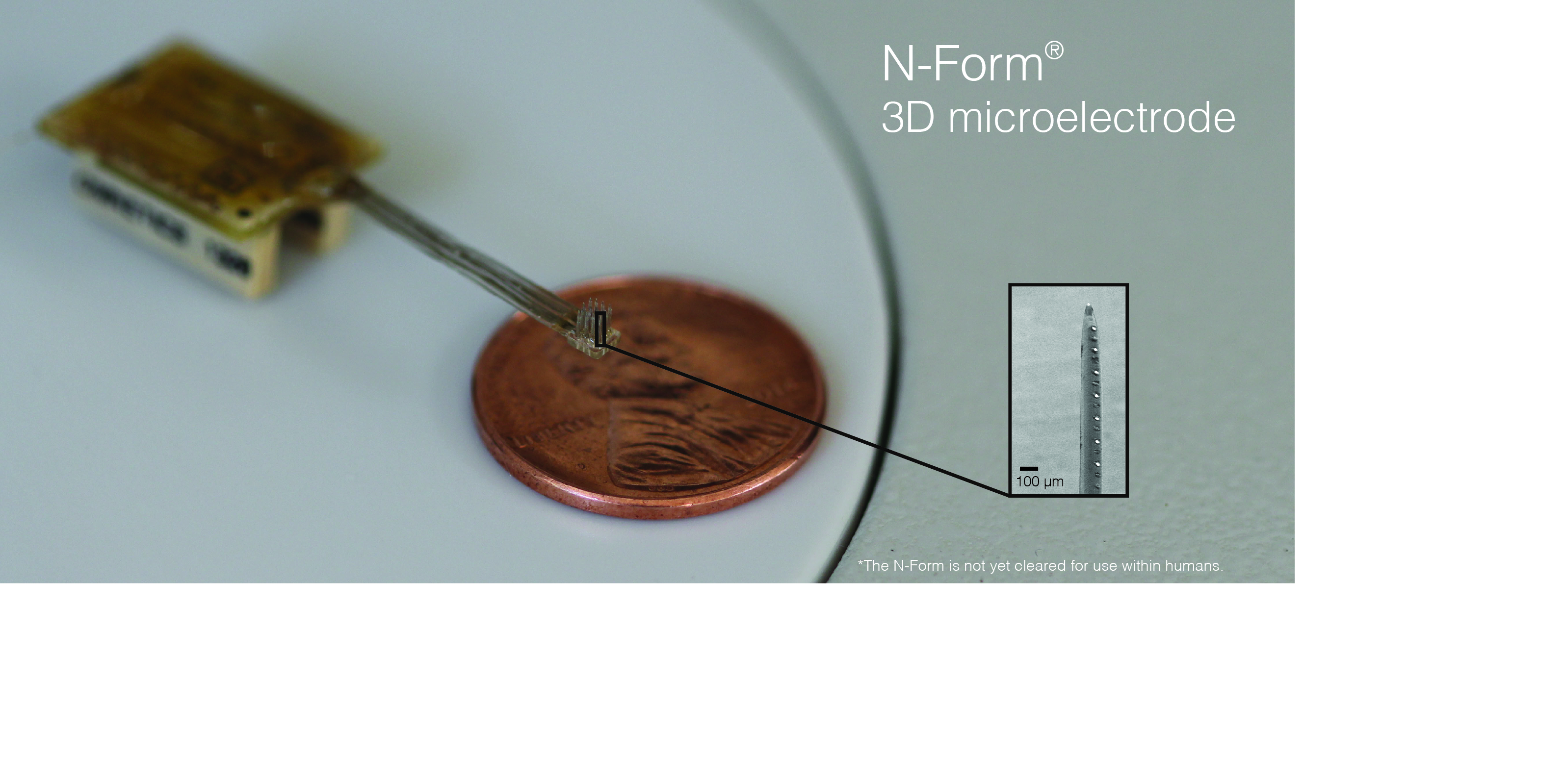
We teamed up with Modular Bionics to address these limitations with the N-Form array. The N-Form is a customizable 3D array exclusively offered by Plexon. With the N-Form, neuroscientists have the power to choose from a number of recording sites in a three-dimensional space.
The animation here demonstrates the N-Form with 32 recording sites at varying depths across four shanks up to 3.5 mm in length. Arrays are currently available for up to 128 channels with a maximum length of 15 mm.
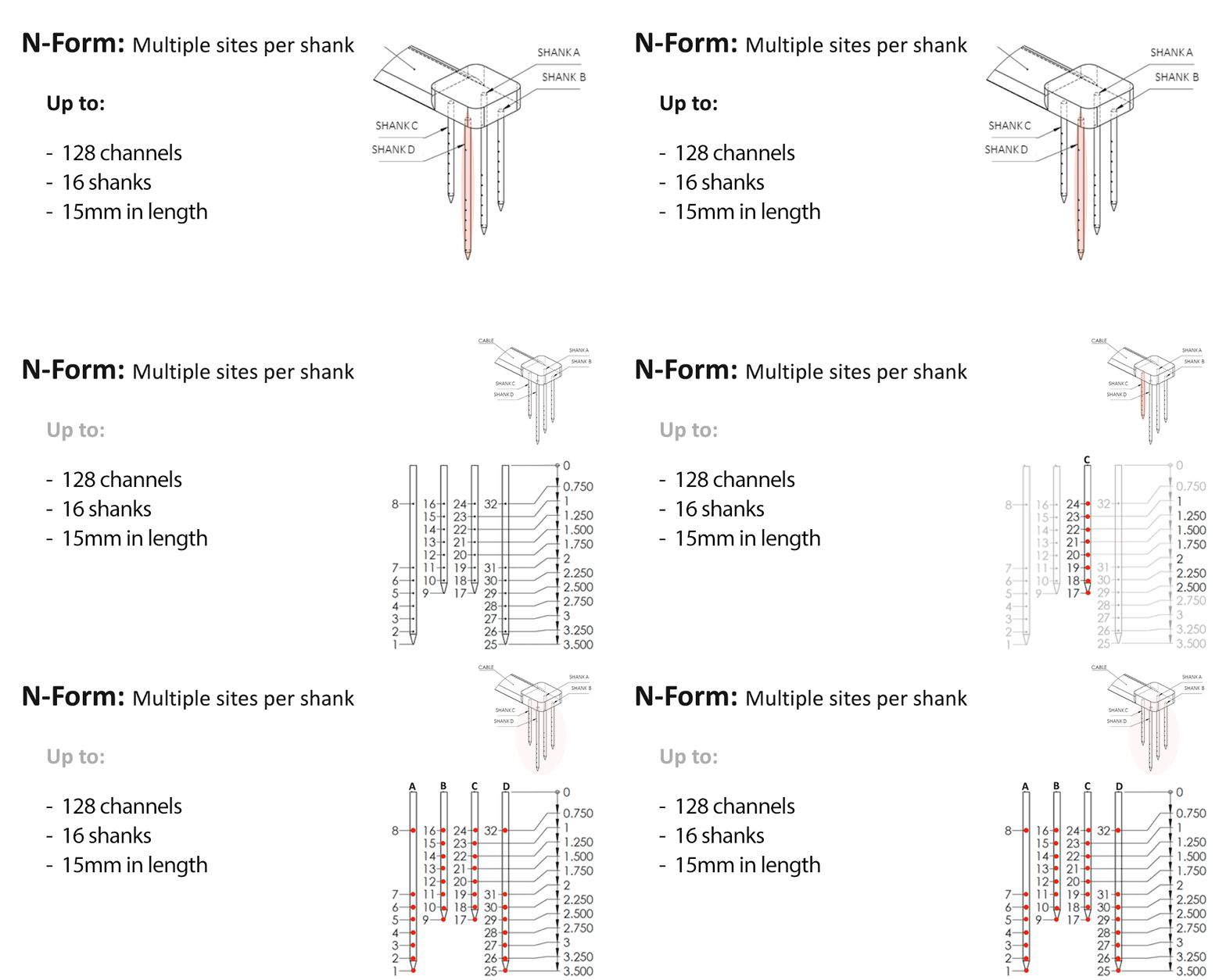
It is compatible with Plexon and non-Plexon systems, and is priced similar to standard linear arrays. Real data from chronic recording experiments and other useful information can be viewed under the Resources tab.
Discuss your needs with a Plexon Sales Engineer to determine the best configuration for your upcoming experiments. It may also be possible to produce arrays beyond the specifications outlined in the Technical Specs tab.
Features & Benefits
Research Applications
In the past year, many labs across several institutions have adopted the N-Form. Their research includes electrical recording and stimulation of:
- Motor cortex
- Sensory cortex
- Spinal cord
- Peripheral nerve fibers
- and more..
What makes the N-Form superior to the Utah array?
| Utah Array | N-Form | |
|---|---|---|
| Length | Limited to 1.5 mm in length. | Up to 15 mm. |
| Recording sites | Limited to one recording site per shank. | Allows you to define specific recording locations at multiple points on each shank. |
| Dimensions | Utah: Two-dimensional. Forced to record from only one site for each shank. | N-Form: Three-dimensional. You define the location of electrode sites on each probe, with the ability to have 8 sites on each shank. |
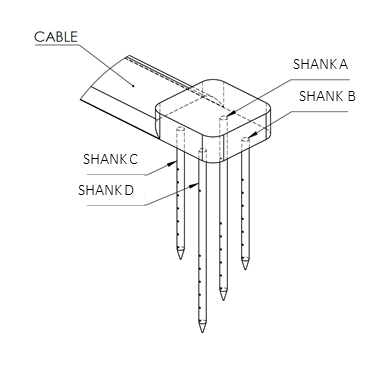
Anatomy of a 3.5 mm 4-shank N-Form® Array.
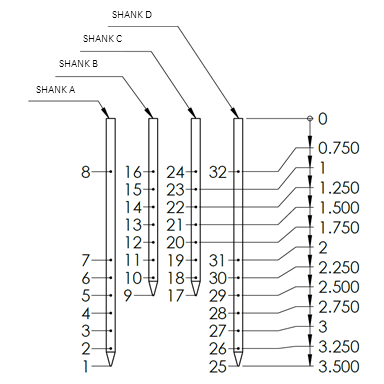
4-shank N-Form® Array site map.
N-Form® Arrays are customizable, as can be seen from the tables below. It may also be possible to produce arrays beyond the specifications below. As a result, it is recommended that you discuss your needs with a Plexon Sales Engineer to determine the best configuration and if your unique request can be accommodated.
Technical Specifications
| Specification | Details |
|---|---|
| Electrode diameter | 25 μm, circular cross-section |
| Electrode material | platinum/iridium |
| Shank thickness | 125 μm* |
| Distance between shanks | GEN1: 400 μm GEN2: 500 μm |
| Maximum number of channels/shank | 8 |
| Sterilization Method | EtO |
| Implantable | Yes, insertion holder required for chronic implantation |
| Electrode Coating | iridium oxide |
Customizable Options
| Option | Available Configuration |
|---|---|
| Cable length | 1.5 cm – 13.0 cm |
| Shank length | 500 μm – 15 mm |
| Site location | All shanks must have an electrode site at the tip. The site neighboring the tip site must be at least 250 μm away from the tip site. 125 μm spacing between other sites. Shanks >4.00 mm cannot have sites placed more proximal than 3.0 mm from the tip. Shanks between 3.625 mm and 3.875 mm cannot have sites placed more proximal than 2.5 mm from the tip. |
| Number of shanks | 1–16 |
| Channel count | 4–128 |
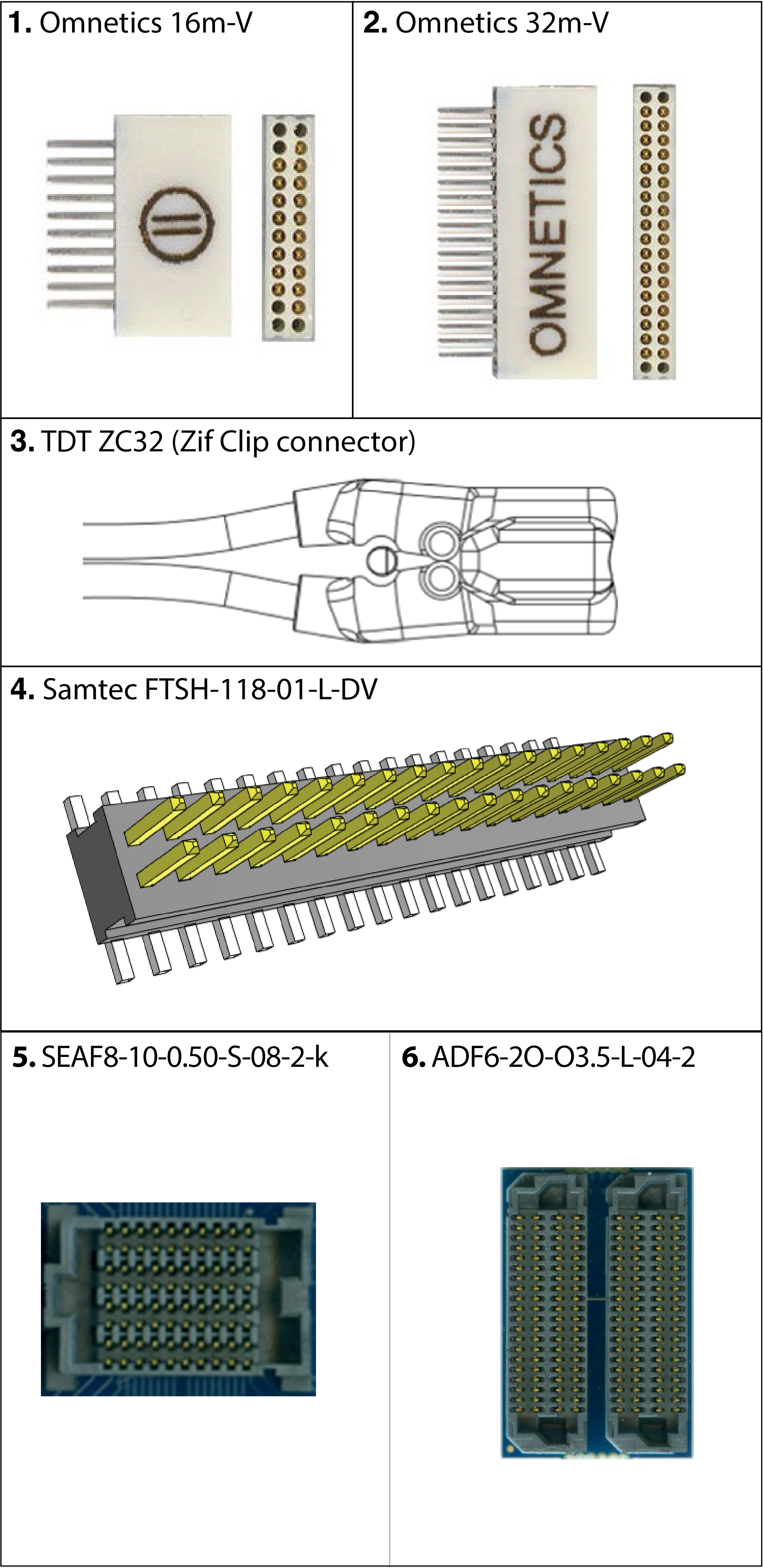
| Connector Type | Omnetics 32m-V, Omnetics 16m-V, TDT ZC32, Samtec FTSH-118-01-L-DV, CON/64f-Samtec: SEAF8-10-05.0-S-08-2-k, and CON/128f-Samtec: ADF6-20-03.5-L-04-2 |
| Backplate thickness | GEN 1 < 3.5 mm = ~500 μm GEN 1 > 3.5 mm = ~800 μm GEN 2 < 3.5 mm = ~600 μm GEN 2 > 3.5 mm = ~900 μm Single shanks available without a backplate |
* Longer shanks may require greater thickness near the base of the shank.
N-Form® Arrays are manufactured by Modular Bionics™ Inc.
U.S. Patents 9,095,267, 10,086,192, 10,368,761, 10,874,847. Patents Pending.
Connectors: Omnetics, Zif, and Samtec
Simple Insertion
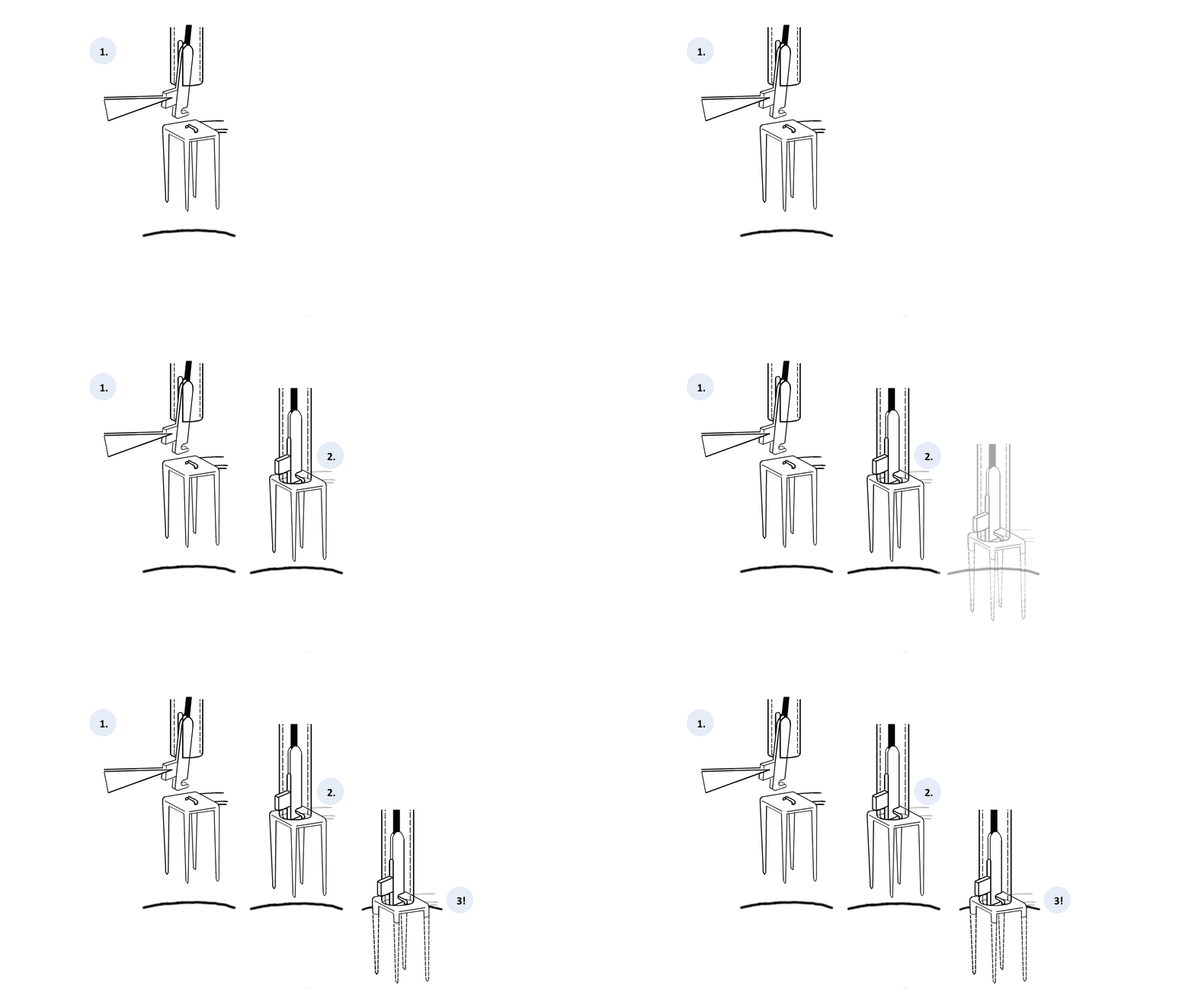
The insertion tool is easily adaptable to many types of microdrives / inserters. Inserting your high-density microelectrode array into brain, spinal-cord and peripheral-nerve tissue is a high-speed, straightforward procedure.
Technical Specs and Data Sheets
- Brown, M. A., Zappitelli, K. M., Singh, L., Yuan, R. C., Bemrose, M., Brogden, V., … Gardner, T. J. (2023). Direct laser writing of 3D electrodes on flexible substrates. Nature Communications, 14(1).
- Middlebrooks, J. C., Javier-Tolentino, L. K., Akshat Arneja, & Richardson, M. L. (2023). High Spectral and Temporal Acuity in Primary Auditory Cortex of Awake Cats. Journal of the Association for Research in Otolaryngology, 24(2), 197–215.